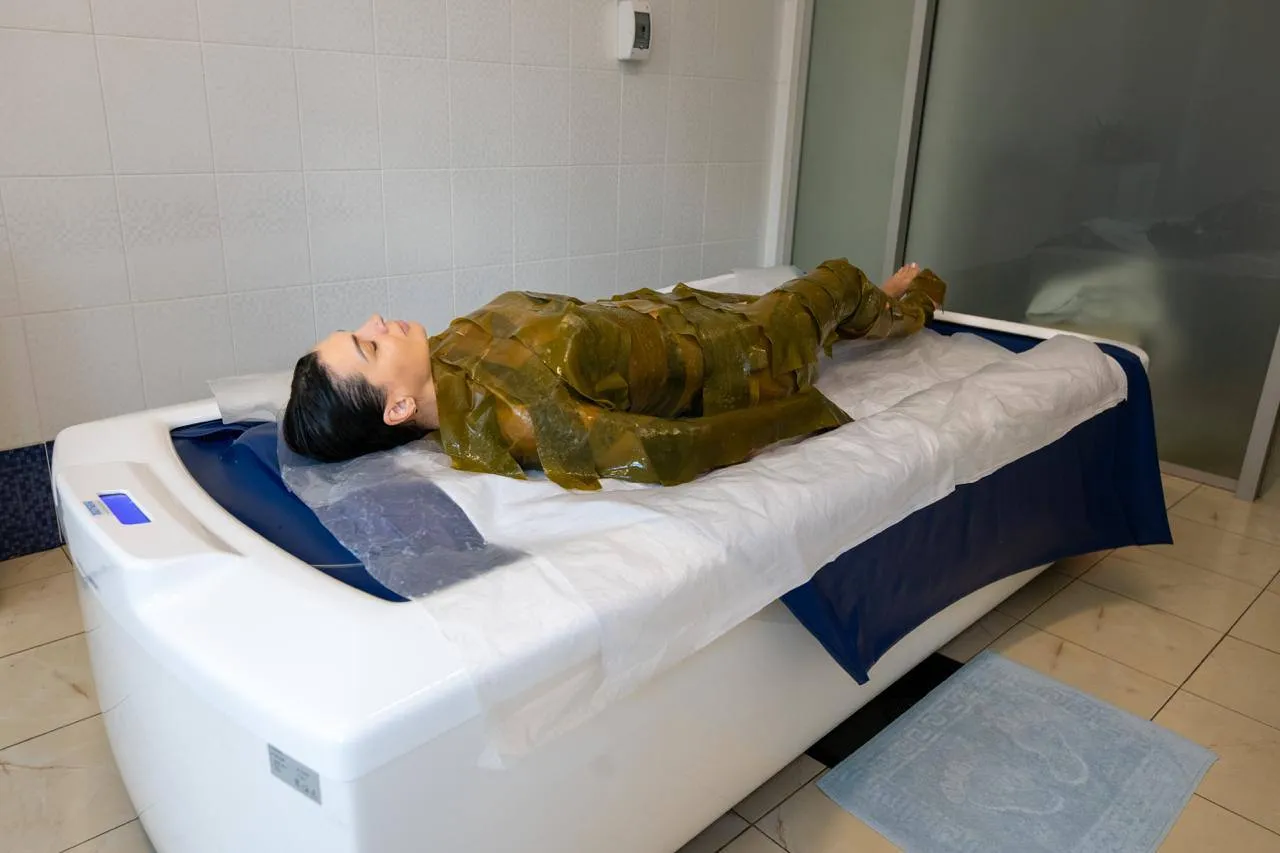
Seawater, algae, salts and marine mud were healing people long before modern physiotherapy existed. Today this field is called thalassotherapy, and one of its most popular procedures is the seaweed body wrap combined with thermo-spa — gentle warming of the body that unlocks the action of marine active compounds.
Here is how a seaweed wrap works, what it does for the skin and the body, how the procedure goes, and who should avoid it.
What is thalassotherapy and why does seaweed work
Thalassotherapy is wellness treatment using the natural factors of the sea: water, algae, salts and mud. The name comes from the Greek thalassa — “the sea”. The discipline took its modern shape in the late 19th century at European seaside resorts, and today algae wraps are a standard part of spa and sanatorium programmes worldwide.
The main tool of thalassotherapy is marine algae — most often laminaria (kelp) and fucus.
Seaweed is a natural concentrate of beneficial substances:
- iodine, which participates in the regulation of metabolism;
- minerals and trace elements: magnesium, potassium, calcium, iron, zinc;
- amino acids and vitamins;
- alginates — compounds that form a nourishing film on the skin and bind metabolic waste.
The composition of seawater is remarkably close to that of blood plasma, which is why the skin responds so well to marine ingredients. During a wrap, the active compounds work on the surface of the skin while heat enhances microcirculation, perspiration and lymphatic flow.
How does a seaweed wrap with thermo-spa work
The procedure is pleasant and requires no preparation on your part:
- the skin is cleansed — sometimes the session starts with a light body scrub to boost the effect;
- warm algae paste is applied to the body, or it is layered with sheets of laminaria;
- you are wrapped in film and covered with a thermal blanket — this is the thermo-spa component: mild heat opens the pores and amplifies the action of the active compounds;
- you rest in the warmth — most people simply doze off at this point;
- finally, the mixture is rinsed off in the shower and a nourishing cream is applied.
Wraps can be hot (they stimulate circulation, relax muscles and activate perspiration) or cold (they tone blood vessels and reduce puffiness — the choice for those prone to varicose veins). A specialist decides which option suits you.
Seaweed wrap benefits for skin and body
The effects of algae wraps are well established in spa and physiotherapy practice.
For the skin:
- improved firmness and elasticity;
- smoother texture — including in areas with visible cellulite;
- mineral nourishment and hydration;
- a mild detox effect: heat and alginates help draw metabolic waste out through the skin.
For the body as a whole:
- better microcirculation and lymphatic drainage, which means less puffiness;
- deep muscle relaxation thanks to the warmth;
- a genuine anti-stress effect — a wrap is a solid stretch of complete stillness;
- support for metabolic processes.
Be realistic: a wrap is a wellness and body-care procedure. It visibly improves the condition and look of the skin, but it does not replace physical activity, balanced nutrition or treatment of an underlying condition.
Who are seaweed wraps for: indications
The procedure is most often chosen for:
- reduced skin tone and sagging, including after weight loss;
- visible cellulite and uneven skin texture;
- a tendency to fluid retention and heavy legs at the end of the day;
- muscle tension and fatigue;
- chronic stress — as a way to relax deeply;
- weight-management programmes and detox courses, as a supporting procedure.
At RUTA center, based at the Koncha-Zaspa sanatorium in Kyiv, the seaweed wrap with thermo-spa is available as a standalone procedure. It pairs naturally with the five-day detox course — marine algae are in fact used within the course programme itself.
Contraindications: who should not get a wrap
This is the section to read before booking. Generally accepted contraindications for this type of procedure include:
- allergy to iodine and seafood — algae contain iodine in high concentration;
- thyroid disorders, particularly hyperthyroidism;
- cardiovascular disease and hypertension — above all for hot wraps;
- pronounced varicose veins — hot wraps are prohibited (cold wraps are possible in some cases);
- pregnancy;
- oncological diseases;
- acute infections and fever;
- damaged skin: wounds, rashes in an acute phase, dermatitis;
- gynaecological inflammatory conditions in an acute phase.
The list looks long, but in practice most restrictions apply to hot wraps — the heat load is the main risk factor. For some conditions a cold wrap is the answer, though it should never be a self-made choice.
The final decision on admission to the procedure is made by the center’s physician after an examination. If you have chronic conditions or any doubts, mention them before the procedure — not after.
How to prepare, how often to repeat and how to book
No special preparation is needed, but a few tips will make the procedure more effective:
- avoid a heavy meal for an hour or two before the session;
- drink enough water on the day of the wrap — it supports the lymphatic-drainage effect;
- don’t sunbathe right before the procedure: sun-warmed skin is more sensitive;
- allow yourself some quiet time afterwards instead of rushing straight back to business.
A single session leaves the skin smooth and the body light; a lasting result comes from a course of procedures, usually spaced a few days apart to let the skin respond to the previous one. The number and frequency are set by a specialist. Current prices are listed on the prices page.
RUTA Medical and Health Center operates at the Koncha-Zaspa sanatorium: 215 Stolychne Shose, Kyiv. Call us — we’ll answer your questions, advise on indications and find a convenient time:
Get rid of the excess — and give your skin what the sea has always offered it.
This article is for information purposes only and does not replace a medical consultation. Admission to the procedure is decided by the center’s physician after an examination.
This article is for information only and does not replace a consultation with a doctor.