Long before modern medicine, people noticed something curious: workers in salt mines rarely suffered from respiratory diseases. That observation eventually grew into a whole branch of climate therapy — and today you no longer need to travel to a cave, because the microclimate of a salt mine can be recreated in an ordinary building.
This is halotherapy — a physiotherapy method based on breathing dry salt aerosol in a specially equipped salt room. Let’s look at how it works, which conditions it genuinely helps with, and who should stay away from it.
What Is Halotherapy and How Is It Different From a Salt Cave?
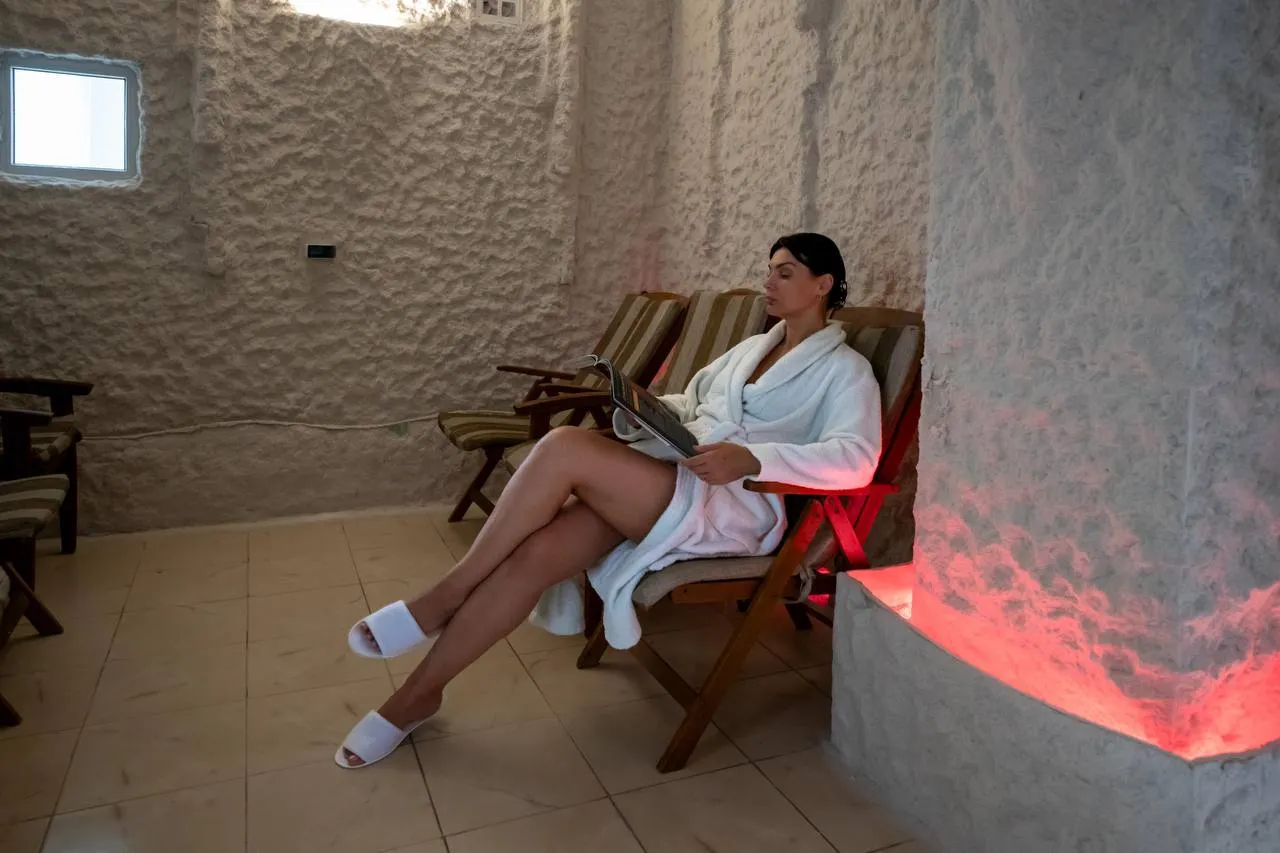
Halotherapy (from the Greek hals — salt) means spending sessions in a room with an artificially created salt-cave microclimate. The walls are coated with a layer of salt, and the air is saturated with microscopic particles of sodium chloride.
Two terms are often confused:
- speleotherapy — treatment in natural salt caves and underground mines;
- halotherapy — the same salt aerosol effect, reproduced in a purpose-built room in the city.
The salt-covered walls create the atmosphere and help keep humidity stable, but the walls themselves are not what heals. The active factor is the aerosol you breathe throughout the session. That is why a proper salt room is not just a spa attraction with pretty salt lighting — it is a physiotherapy procedure with real indications and contraindications.
Dry Salt Aerosol: What Happens in Your Airways
The salt particles in the air of a halotherapy room are so fine that they travel deep into the respiratory tract, reaching even the small bronchi. There the aerosol works in several ways at once:
- it thins mucus and makes it easier to cough up — salt draws in moisture and reduces the viscosity of secretions;
- it stimulates mucociliary clearance — the tiny cilia that sweep dust, mucus and microbes out of the bronchi start working more effectively;
- it reduces swelling of the mucous membranes, so breathing — including nasal breathing — becomes easier;
- it inhibits bacterial growth: a salty environment is hostile to most microorganisms;
- it gives the airways a rest from allergens — the air in the room is practically free of dust and pollen.
There are pleasant side benefits too. Salt aerosol settles on the skin and has a mild soothing effect, which is why halotherapy is sometimes combined with care for chronic skin problems. And the quiet, dim light and slow breathing of a session produce a noticeable relaxation effect — many people leave the salt room feeling as if they have just had a meditation session.
Which Respiratory Conditions Is Halotherapy Used For?
Salt room therapy is prescribed primarily for chronic and recurrent airway conditions outside of exacerbation:
- chronic bronchitis, including smoker’s bronchitis;
- bronchial asthma in remission — as a supportive method of control;
- chronic rhinitis, sinusitis, pharyngitis and tonsillitis;
- allergic rhinitis and hay fever — to reduce the reactivity of the mucosa;
- frequent respiratory infections and lingering cough after a cold or flu;
- rehabilitation of the respiratory system after bronchitis or pneumonia.
Beyond the airways, halotherapy is used for general wellness: the salt aerosol benefits some chronic skin conditions, and the calm, allergen-free environment helps with chronic fatigue and high stress load.
One thing must be said clearly: halotherapy is a supportive method. It does not replace the treatment prescribed by your pulmonologist or allergist — but it complements it well and helps extend remission.
Halotherapy for Children and Frequent Colds
The most grateful visitors of salt rooms are children who get sick often. A child’s airways are narrower, the mucosa responds to every infection with swelling and heavy mucus, and one cold chases the next. A course of halotherapy helps break that cycle: the airways clear, and the local defences of the mucosa strengthen.
For adults, salt therapy works best as prevention:
- for people working in dusty environments or air-conditioned offices;
- for smokers and those who have recently quit;
- for city dwellers — as a periodic “reset” for the bronchi;
- for anyone who wants fewer seasonal colds.
A session requires no effort at all: you simply sit in a comfortable chair and breathe. That is also why halotherapy combines so naturally with other health procedures — for example, alongside a structured health course or as standalone visits.
Contraindications: Who Should Avoid the Salt Room
Gentle as it is, halotherapy has clear contraindications:
- acute infectious diseases and any condition with fever;
- an active asthma flare-up or exacerbation of any chronic respiratory disease — the flare-up must be brought under control first;
- active tuberculosis;
- coughing up blood or a tendency to bleeding;
- severe heart or respiratory failure;
- hypertension with frequent crises;
- oncological diseases;
- individual intolerance to salt aerosol;
- claustrophobia — an enclosed room can cause distress.
Pregnancy and severe decompensated chronic diseases call for extra caution and an individual decision.
The final decision on whether you can have the procedure is made by the center’s doctor after an examination. If you are in doubt, one extra question to a doctor is always better than a session that does more harm than good.
What a Session Is Like and How to Book in Kyiv
For the guest, a halotherapy session could not be simpler: comfortable clothes, a reclining chair, calm breathing. No injections, no devices attached to your body, no unpleasant sensations — which is exactly why both adults and children enjoy it. Afterwards you can return to your normal day straight away.
At the RUTA Medical and Health Center, halotherapy is available as a standalone service. The center operates on the grounds of the Koncha-Zaspa sanatorium at 215 Stolychne Highway, Kyiv, under a license of the Ministry of Health of Ukraine (series AB No. 567785, issued 11.11.2010). You can attend salt room sessions on their own or combine them with the center’s other procedures — see current rates on the prices page.
Call us — we will answer your questions, advise on indications and find a convenient time:
Give your airways a break in clean salt air — they will thank you.
This article is for information only and does not replace a medical consultation. The decision to undergo the procedure is made by a doctor after an examination.
This article is for information only and does not replace a consultation with a doctor.