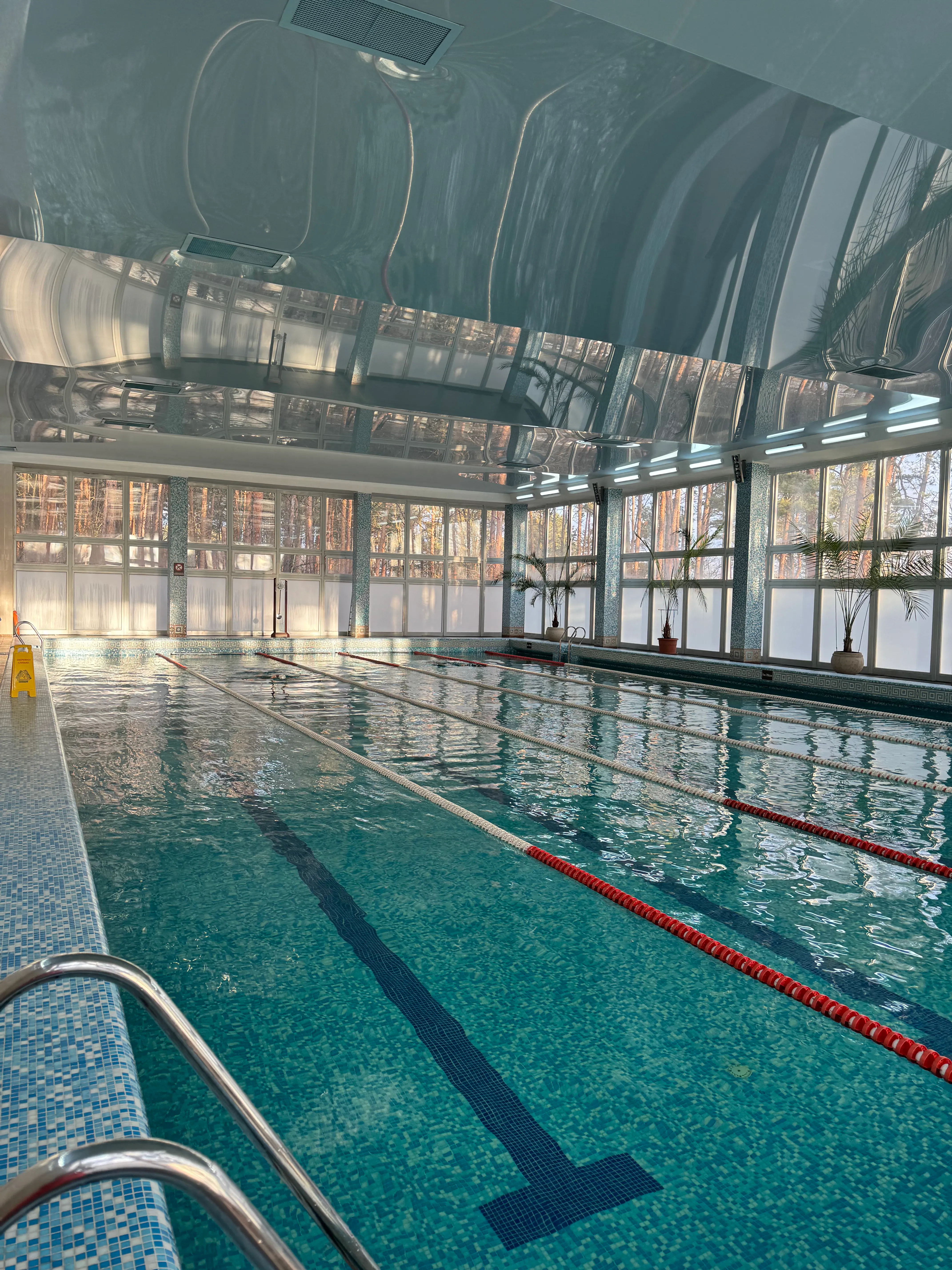
Swimming is one of the few kinds of exercise doctors recommend to almost everyone: people with back problems, people struggling with excess weight, and people worn down by chronic stress. The reason is simple — water unloads the body and loads the muscles at the same time, a combination no gym machine can offer.
Let’s look at what actually happens to your body in the pool, who benefits most from swimming, and why RUTA includes it in its body cleansing program.
Why water heals: what happens to your body in the pool
In water, your body finds itself in unusual physical conditions — and these explain most of swimming’s health effects:
- buoyancy removes most of the habitual load from the spine and joints — in water the body “weighs” only a fraction of its mass;
- water resistance makes muscles work far harder than in air, yet smoothly, without jolts or impact;
- hydrostatic pressure gently compresses vessels and tissues, improving venous return and lymph flow — a natural full-body massage;
- cool water activates thermoregulation, so the body spends extra energy on maintaining its temperature;
- the horizontal position eases the work of the heart and evens out the load along the spine.
Together this trains the cardiovascular and respiratory systems and strengthens muscles while remaining one of the safest, lowest-injury forms of exercise available.
Swimming for back pain and a healthy spine
Back pain is the standard companion of desk work, and this is where the pool makes its strongest case. On land the spine is constantly compressed by body weight, the intervertebral discs are squeezed, and the back muscles stay chronically tense. In water the picture reverses:
- the spine is unloaded, the spaces between vertebrae gently increase, and the discs get a chance to restore their nutrition;
- the back and core muscles work symmetrically, building the muscle corset — the spine’s main natural support;
- tense, spasmed muscles relax thanks to the water and smooth, rhythmic movement;
- circulation improves in the tissues surrounding the spine.
Relaxed backstroke and front crawl are considered the most spine-friendly styles. The beginner’s habit of swimming breaststroke with the head held high above the water, by contrast, overloads the neck — the face should go into the water on the exhale.
In RUTA’s five-day program, pool time is combined with therapeutic back massage (the collar and lumbosacral zones). The two procedures reinforce each other: massage releases muscle spasm, and swimming locks in the result through movement.
Swimming for weight loss: what the pool can and cannot do
For people carrying significant excess weight, running or jumping is often simply off the table — the joints and spine cannot take the impact. Swimming is practically the only workout accessible at any body weight: the water carries you, and injuring yourself in it is much harder.
What the pool contributes to weight normalization:
- high energy expenditure — nearly all muscle groups work at once, and extra calories go to keeping the body warm;
- a faster metabolism and better circulation;
- stronger muscles without overloading the knees, hips and lower back;
- gradually growing endurance, which later opens the door to other activities.
One honest caveat: swimming alone will not melt excess kilograms if nutrition stays the same and the metabolism is not addressed. The best results come from a combination of dietary correction, body cleansing and regular movement. Notably, alimentary-constitutional obesity of stages I–IV is one of the direct indications for the cleansing course at RUTA.
Water against stress: swimming and the nervous system
The feeling of “leaving the pool a different person” is not autosuggestion. Water affects the nervous system through well-understood mechanisms:
- rhythmic, monotonous strokes and measured breathing work much like breathing exercises — they activate the parasympathetic nervous system, responsible for rest and recovery;
- physical exertion helps the body process stress hormones and stimulates endorphin production;
- water muffles external stimuli — noise, screens, the information stream — giving the brain a rare pause;
- sleep improves after swimming, and sleep is when the nervous system recovers best.
This is why swimming is often recommended for chronic fatigue syndrome, astheno-vegetative syndrome and low mood — conditions that bring many guests to RUTA in the first place.
The pool in RUTA’s cleansing program
At RUTA the pool is not a pleasant extra but a full component of the five-day inpatient cleansing course. The program includes one hour of pool time, along with therapeutic back massage, diet therapy, herbal teas, remedial exercises, water procedures and more.
Why the combination makes sense:
- during the course the body is actively eliminating metabolic waste — movement in water improves circulation and lymph drainage, supporting that process;
- gentle exercise helps maintain muscle tone during the low-protein, salt-free diet;
- swimming relieves tension and lifts the mood — which matters, because the course requires discipline;
- water unloads the back between procedures and rest.
Pool visits are also available as a separate service, without taking the full course. See the pool service page for details and the prices page for current course rates.
Contraindications: when the pool is not for you
Swimming is among the safest forms of exercise, but it still does not suit everyone. You should stay out of the pool with:
- acute infectious diseases and fever;
- contagious skin conditions or open wounds;
- acute inflammatory processes of any location;
- severe decompensated cardiovascular disease;
- uncontrolled epilepsy;
- flare-ups of chronic conditions.
Relative contraindications are individual: what is forbidden during a flare-up is often allowed in remission. The final decision on pool use and the appropriate level of exertion is made by the center’s doctor after an examination — which is why every guest is examined before the five-day course: ultrasound, ECG, blood and urine tests.
How to start? RUTA operates on the grounds of the Koncha-Zaspa sanatorium: 215 Stolychne Highway, Kyiv. You can take the full five-day cleansing course with pool time included, or visit the pool separately.
Call us — we will answer your questions, advise on indications and help you pick dates:
Get rid of the excess — and give your body the kind of movement that heals.
This material is for information purposes only and does not replace a medical consultation. Decisions about procedures are made by a doctor after an examination.
This article is for information only and does not replace a consultation with a doctor.