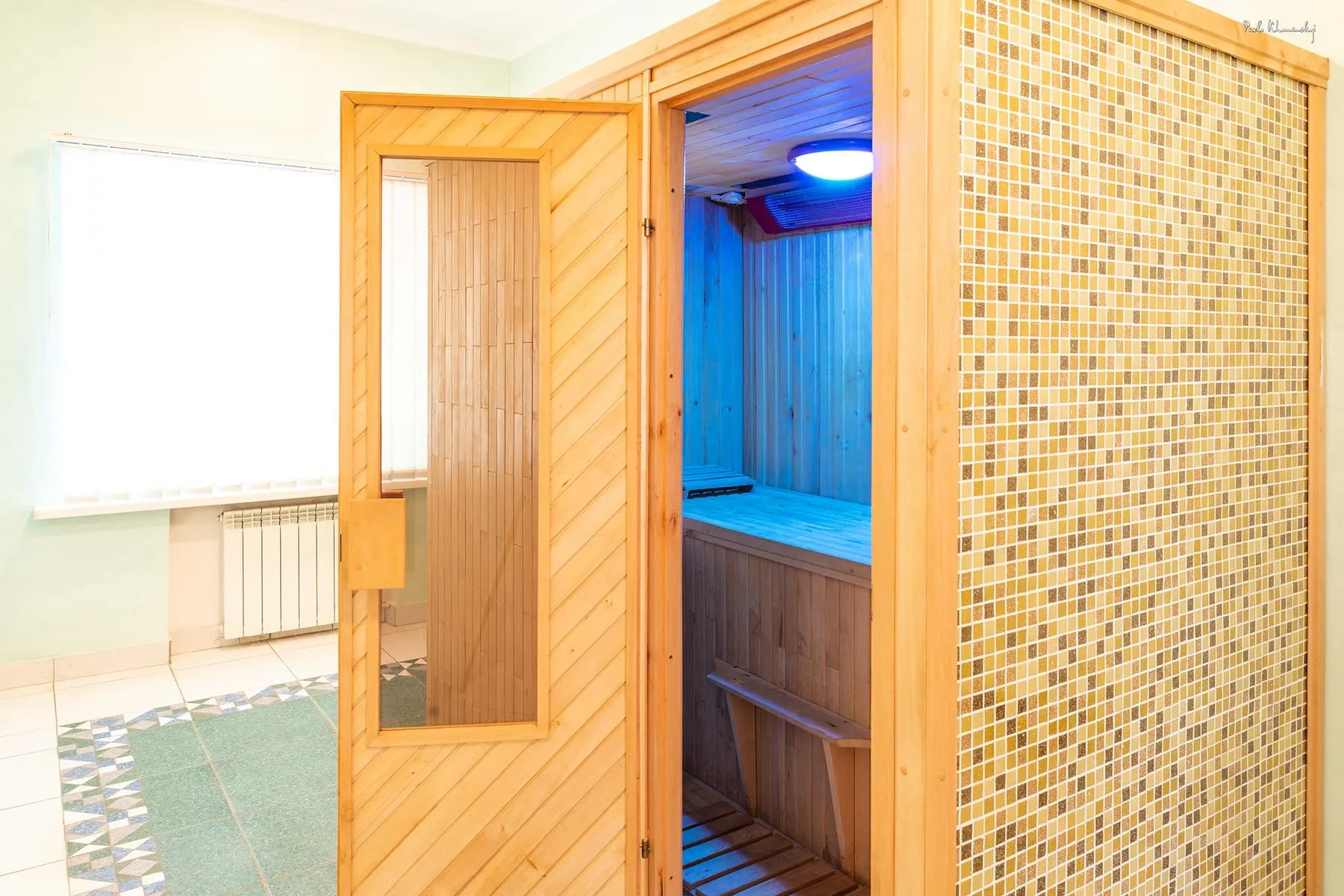
“The sauna flushes toxins out through your sweat” is one of the most repeated health claims in popular media. It sounds convincing: you sweat, therefore you cleanse. Physiologically, though, things work quite differently — and an honest conversation about it is worth more than another marketing myth.
Let’s look at what actually happens to the body in the sauna, where its real benefits lie, how to bathe safely, and who should stay away from heat altogether.
What happens to your body in the sauna
A sauna session is controlled heat stress. In response to high temperature, the body launches a whole cascade of reactions:
- skin blood vessels dilate and circulation shifts toward the body surface — the skin flushes and warms;
- the heart works harder: the pulse rises as it would during light exercise, which is why the sauna is often called “passive cardio”;
- sweating switches on — the body’s main cooling mechanism: as sweat evaporates, it carries heat away;
- muscles relax, their tone and tension decrease;
- after the session the nervous system shifts into recovery mode — which is why sleep comes so easily after a sauna evening.
Alternating heat and cooling trains the blood vessels: they learn to constrict and dilate quickly. That is the sauna’s main health mechanism — not any “release of toxins”.
Does the sauna remove toxins? The honest answer
Let’s be direct: the sauna does not “flush toxins out through sweat” in the sense popular media promises.
- Sweat is 98–99% water and mineral salts. Trace amounts of other substances are present, but their share is negligible.
- Neutralizing toxic compounds is the job of the liver, and removing them is the job of the kidneys and intestines. That is their core work, and sweat glands are no competition.
- Heavy sweating is above all a loss of fluid and electrolytes that needs replacing — not a cleansing event.
Why, then, do you genuinely feel better after a sauna? Because it acts on the body through different channels — circulation, muscles and the nervous system. The sauna supports the body’s natural cleansing systems: it improves microcirculation and lymph drainage, relieves the stress that suppresses metabolic processes, and improves sleep. The cleansing itself remains the work of the liver and kidneys — and if those are the organs you want to help, you work with them directly: through diet, fluid intake and medically supervised programs such as the five-day cleansing course at RUTA.
This honesty does not diminish the sauna’s value. On the contrary: once you understand the real mechanism, you use the procedure for what it actually does — and get more out of it.
The real health benefits of the sauna
Strip away the myths, and the sauna still keeps a solid list of effects confirmed by practice:
- vascular and cardiac training — regular heat sessions improve the cardiovascular system’s adaptation to load;
- muscle relaxation — heat releases spasm and tension, which is why the sauna works so well after exercise and for muscle fatigue;
- stress reduction — warmth stimulates endorphin production, and the ritual of rounds and rest forces you to slow down;
- better sleep — after an evening sauna, falling asleep is easier and sleep is deeper;
- skin care — active circulation and sweating clear the pores and improve skin nutrition;
- hardening — the contrast of heat and cool trains thermoregulation and the body’s resilience to temperature swings.
Sauna safety rules: how to bathe without harm
The sauna is a workload, and it should be treated like one: in measured doses and with common sense. The basic rules of accepted practice:
- do not enter the sauna hungry or straight after a heavy meal — ideally 1–2 hours after light food;
- no alcohol before or during the session — heat plus alcohol puts a dangerous load on the heart and blood vessels;
- start with short rounds on the lower bench and extend the time gradually, round by round;
- rest between rounds — cooling down and pausing matter as much as the heating itself;
- drink water before and after — sweating removes fluid and electrolytes that must be replaced;
- take off jewellery and glasses, cover your head with a felt hat or a towel;
- listen to your body: dizziness, nausea or a pounding heart are signals to leave immediately and cool down;
- do not plunge into ice-cold water unprepared — a sharp contrast is safe only for trained bathers.
The guiding principle: a sauna should leave you pleasantly relaxed, not drained. If you feel wrecked after the session, the regimen is wrong.
Sauna contraindications: who should stay away
Heat stress does not suit everyone. Avoid the sauna with:
- acute infections and inflammation, fever;
- severe decompensated cardiovascular disease, a recent heart attack or stroke;
- uncontrolled hypertension;
- progressing cancer;
- epilepsy;
- skin diseases in an acute or contagious stage;
- bleeding tendencies or thrombosis;
- pregnancy — without a doctor’s explicit approval.
Relative contraindications are individual: age, chronic conditions outside a flare-up, the state of the blood vessels. The final decision on whether the sauna is allowed, and in what regimen, is made by the center’s doctor after an examination — self-diagnosis has no place here, least of all where the heart and vessels are concerned.
The sauna at RUTA: on its own or alongside the course
At RUTA, on the grounds of the Koncha-Zaspa sanatorium, the sauna is available as a separate service — see the sauna service page for details. Heat procedures complement a health program naturally: they improve circulation and lymph flow, relax the muscles after massage and swimming, and lower stress levels.
If your actual goal is cleansing the body, the honest advice of this article is simple: work with the liver, intestines and kidneys, and use the sauna as pleasant support rather than the main tool. Current course rates are on the prices page.
Call us — we will answer your questions, advise on indications and help you choose procedures:
Get rid of the excess — with a clear understanding of how your body really works.
This material is for information purposes only and does not replace a medical consultation. Decisions about heat procedures are made by a doctor after an examination.
This article is for information only and does not replace a consultation with a doctor.