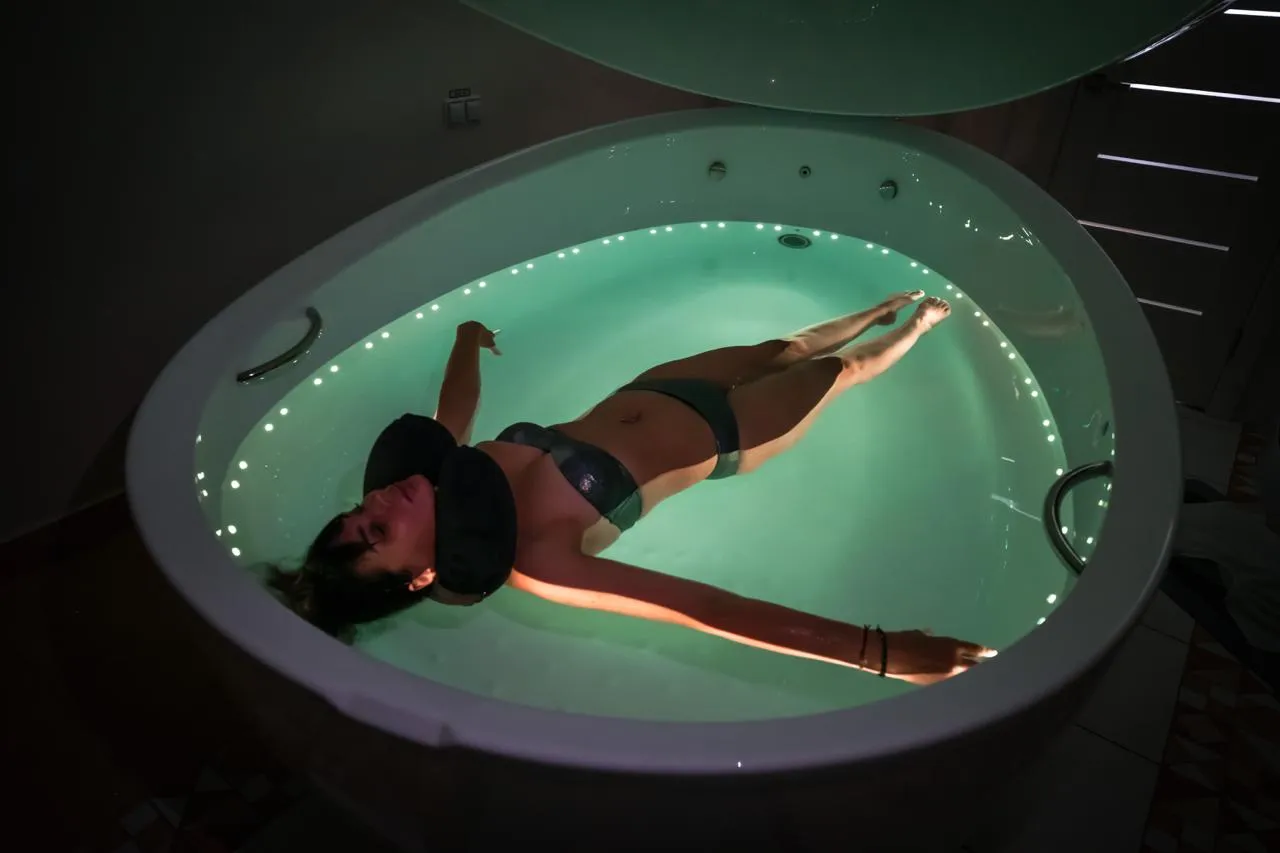
Constant tension, shallow sleep, a stiff neck and shoulders — the default state of anyone living and working in a big city. The brain never gets a minute of genuine quiet: light, noise, notifications, deadlines. Floating therapy is one of the few procedures that removes every stimulus at once and gives the nervous system exactly what it lacks most — complete silence.
Here is what floatation therapy actually is, how a session works, what benefits you can realistically expect, and who should avoid it.
What is floating therapy and how does it work
Floating (floatation-REST — Restricted Environmental Stimulation Therapy) is a form of therapy built on minimising sensory input. You lie in a float tank or pool filled with a concentrated solution of Epsom salt — magnesium sulfate. The solution is so dense that your body rises to the surface with zero effort, much like in the Dead Sea.
Three factors do the work:
- weightlessness — the salt supports your body, so muscles, joints and spine are fully unloaded;
- water heated to skin temperature — the boundary between body and water fades away;
- darkness and silence — external stimuli drop close to zero.
A brain accustomed to processing a constant stream of signals is suddenly left without them. Activity in stress-related centres decreases, breathing and heart rate slow down, and the mind drifts into a deeply calm state — somewhere on the edge between waking and sleep.
How does a float session go
The procedure is simple and requires no physical preparation:
- you take a shower and remove any cosmetics before entering;
- earplugs are optional but recommended to keep water out of your ears;
- you lie on your back — the solution lifts you to the surface on its own;
- lighting and music can usually be switched off entirely or left dimmed;
- afterwards you shower again to rinse the salt off your skin and hair.
A standard session in worldwide practice lasts 40–60 minutes. During the first ten minutes the brain is still “searching” for stimuli; real depth comes after that, which is why very short floats give a weaker effect.
You don’t need to swim or move at all — the water holds you. Even if you fall asleep, which happens often, nothing bad will occur: the density of the solution keeps you safely on the surface.
Is it safe if I can’t swim
Yes. Floating has nothing in common with swimming: the tank is shallow, and the buoyancy of the salt solution makes sinking physically impossible. That is one reason the procedure suits people of any age and fitness level.
Benefits of floating therapy for body and mind
The effects of floatation therapy are well documented in physiotherapy practice, and most people feel them after the very first session.
For the body:
- deep release of muscle tension, especially in chronically tight areas — neck, shoulders, lower back;
- decompression of the spine and joints, which carry no load in weightlessness;
- faster recovery after intense physical exercise — a key reason athletes use float tanks;
- softer, well-conditioned skin thanks to the salt solution.
For the nervous system:
- lower stress and anxiety levels — silence and darkness let the brain genuinely reboot;
- deeper, more restful sleep on the following nights;
- improved focus and mental clarity;
- a steadier emotional baseline.
Many people describe the after-float state as “like I’ve just slept a full eight hours” — after a procedure that takes less than one.
Who is floating therapy for: indications
Floating suits a very wide range of people. It is most often chosen for:
- chronic stress and burnout, when the nervous system never gets to recover;
- sleep problems: difficulty falling asleep, shallow sleep, waking up tired;
- muscle tension and back or neck pain caused by desk work;
- recovery after training and heavy physical loads;
- heightened anxiety, tension headaches, weather sensitivity;
- or simply the wish to rest properly — without screens and stimuli.
At RUTA Medical and Health Center, based at the Koncha-Zaspa sanatorium in Kyiv, floating is available as a standalone procedure. You can book it on its own or combine it with the five-day detox course — deep relaxation is a natural complement to a cleansing programme.
Contraindications: who should not float
Despite being a gentle procedure, floating is not for everyone. Generally accepted contraindications for this type of procedure include:
- epilepsy and other seizure disorders;
- acute infectious diseases, fever;
- skin conditions in an acute phase, open wounds, fresh burns (including sunburn) — salt irritates damaged skin;
- severe cardiovascular disease in a stage of decompensation;
- acute psychiatric disorders and psychotic states;
- otitis or a perforated eardrum;
- alcohol or drug intoxication;
- pronounced claustrophobia — a relative contraindication: an open tank lid and soft lighting solve the problem for most people.
Floating is often recommended to pregnant women as a way to unload the back — but only after consulting the doctor managing the pregnancy.
The final decision on admission to the procedure is made by the center’s physician after an examination — so before your first float, mention any chronic conditions and how you currently feel.
How to prepare and book a float session in Kyiv
A few simple rules will make your first session comfortable:
- no coffee or energy drinks for 2–3 hours before the float;
- don’t shave or wax on the day of the session — the solution may sting;
- remove contact lenses and jewellery, skip creams and oils;
- avoid a heavy meal right before floating;
- leave no urgent plans for right after — give yourself time to “come back”.
Current prices for procedures and programmes are listed on the prices page.
RUTA center operates at the Koncha-Zaspa sanatorium: 215 Stolychne Shose, Kyiv — surrounded not by city blocks but by the Koncha-Zaspa greenery, which does half of the relaxation work on its own. Call us — we’ll answer your questions, advise on indications and find a convenient time:
Give your nervous system an hour of true silence — it has earned it.
This article is for information purposes only and does not replace a medical consultation. Admission to the procedure is decided by the center’s physician after an examination.
This article is for information only and does not replace a consultation with a doctor.