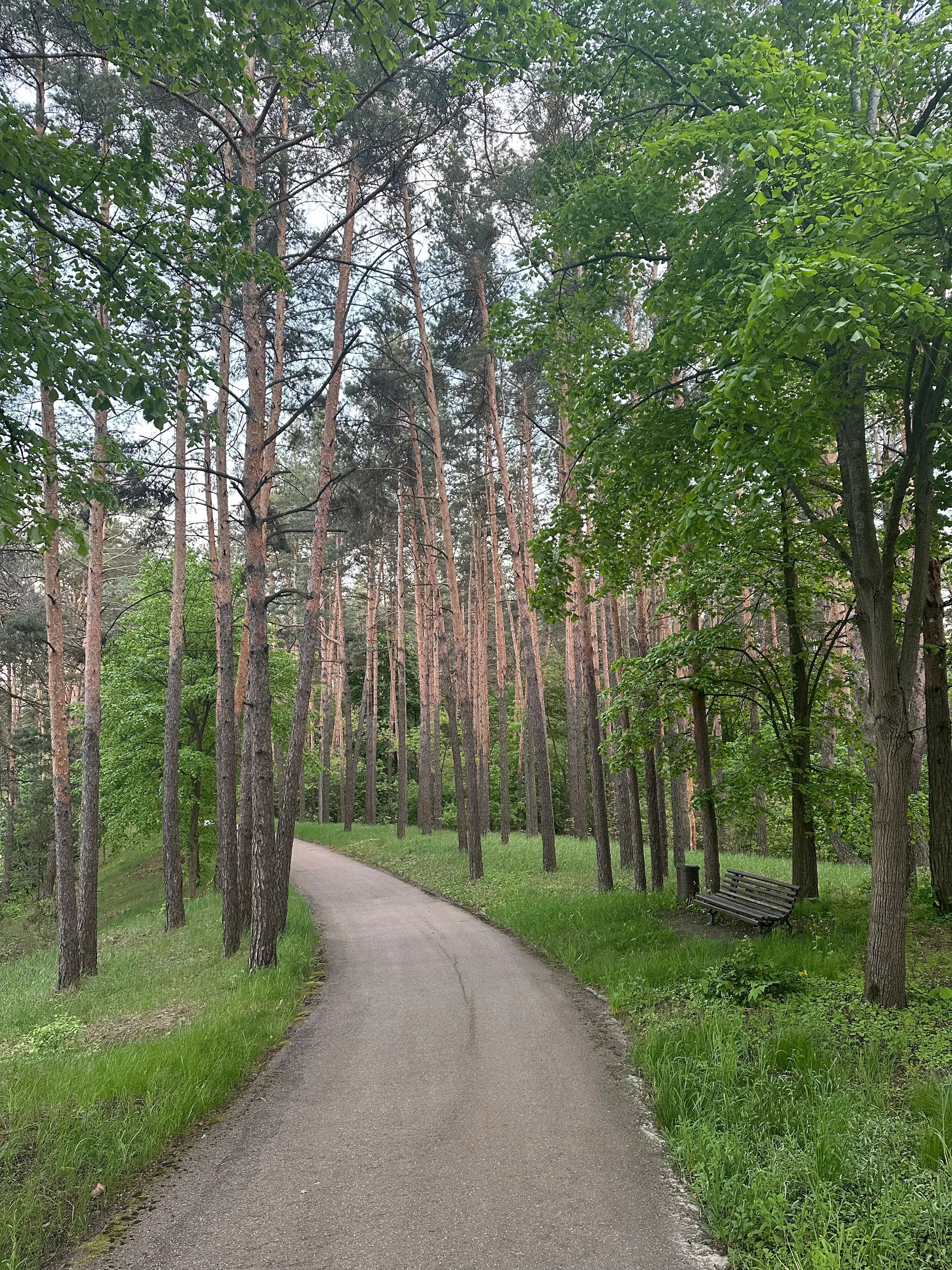
“Detox retreat”, “detox holiday”, “where to go to cleanse the body” — people searching for these are not looking for a procedure. They are looking for a format: to leave home for a few days and let someone else take charge. The wish is understandable: at home, cleansing rarely works out — the fridge is nearby, work never lets go, and habits are stronger than intentions.
Ukraine offers several retreat formats, and they genuinely differ — in purpose, depth and level of medical supervision. This article is neither a ranking nor an advertisement. It is a guide: how the formats differ, which criteria to check before booking, and which practical questions to settle before you go.
Why a detox is a trip, not a list of procedures
Any cleansing programme rests on routine: meals, drinking regimen, procedures on schedule, sleep. At home this routine falls apart within a day or two — not because of weak willpower, but because the environment works against it.
A retreat solves exactly that: you physically leave your usual environment, and the routine is held up not by willpower but by the daily order of the place you came to. So the question “where to go” really means “who will hold my routine, and how” — and different formats answer it differently.
Three detox formats in Ukraine
A spa hotel with a detox menu
A holiday format: a beautiful location, a spa area, and a light menu the hotel calls a detox programme. There is usually no medical supervision — no examination before you start and no doctor nearby.
This is a perfectly good choice if the goal is to rest, sleep well and eat lighter than at home for a few days. Just do not expect more from the format: “detox” on a menu is a marketing word, not a therapeutic programme.
A sanatorium with a general wellness programme
A routine format: a daily schedule, dietary meals, procedures by prescription and, as a rule, a doctor on staff. Classic sanatorium programmes run for two to three weeks, and cleansing is usually one option within general wellness rather than a separately structured programme with stages.
It suits those who have time to spare and want gradual, routine-based recovery without intensity.
A medical center with an inpatient cleansing course
A medical-programme format: shorter, but with a complete structure — an examination before the start, a doctor who determines contraindications for each individual, consecutive stages and supervision throughout the course.
The RUTA center works in this format: a five-day inpatient cleansing course. But let us be honest — this format is not universal either: it is for people who come specifically for a cleansing programme, not for a holiday with procedures.
None of the three formats is the “right” one for everybody. They answer different needs — and it is more honest to choose by your goal than by advertising vocabulary.
Seven criteria for choosing a detox destination
This checklist works for any format — simply run through it before booking.
- Is there an examination before the start? If the programme includes therapeutic procedures rather than just spa treatments, there must be entry screening: ultrasound, tests, a consultation. Some contraindications have no obvious symptoms and cannot be spotted without an examination.
- Who determines contraindications? A booking questionnaire is not a health assessment. Ask directly: “Who decides I am fit for this, and on what basis?” The correct answer is: a doctor, after an examination, individually.
- Is there a medical licence? If therapeutic procedures are advertised, the facility must hold a licence from the Ministry of Health of Ukraine. The number is usually published on the website — and if not, you can simply ask.
- What does the price include? Accommodation, meals, the examination, procedures — is everything covered, or are some items paid separately? On-the-spot surcharges are the most common source of disappointment in retreat formats.
- How long is the programme, and does it have a structure? A set of procedures in random order and a programme with consecutive stages are different things. Ask why the procedures follow this particular order: a well-built programme has an answer.
- Who is nearby if you feel worse? Cleansing puts a load on the body, and reactions vary. In a format without medical staff the only answer is “we will call an ambulance”. In an inpatient format a doctor is nearby, sees the dynamics and can adjust the programme.
- What do they promise you? An honest programme does not guarantee “minus five kilograms” and does not promise to cure chronic diseases. Promises that sound like guaranteed results are a warning sign — especially in a medical field.
Notice that these criteria say nothing about pools, interiors or menus. Comfort matters, but choosing a detox programme by photos of the rooms is like choosing a hospital by the colour of its walls.
How many days is optimal
The short answer: as many as the structure of the programme requires — not the calendar.
- One or two days is a holiday format. You can reset, but you cannot complete a staged programme: the body has only begun to adjust.
- Five days is a common format for inpatient cleansing courses — enough for a complete programme, and short enough to fit into an ordinary holiday. The RUTA course lasts exactly 5 days and consists of two stages: the first works on the liver, gallbladder, intestines and kidneys, the second on the lymph, blood and blood vessels.
- Two to three weeks is the sanatorium rhythm, for those who have the time and prefer gradual change.
One more practical point — how often to repeat. According to the center, people who look after their health take cleansing courses once every 10–16 months, depending on lifestyle and habits. A detox retreat is not a monthly ritual but an infrequent, structured programme.
Practical questions before the trip
What to pack
Documents; results of previous examinations and medical records, if any — they help the doctor build a fuller picture; any medication you take regularly — and be sure to tell the doctor about it. As for things: comfortable clothes and shoes for walks, a swimsuit and cap for the pool, a book instead of a news feed. No need to bring special food or teas: on the course, meals and drinking are part of the programme.
Can I work remotely?
Honestly: a full working day and a schedule filled with procedures do not mix well. Answering emails in your free time is fine, but if you can, plan the course as a holiday. Changing your routine — the informational one included — is part of the result.
Alone or with someone?
Both options work. With a partner it is easier to commit and stay the course; alone, you get more of the quiet many people actually come for. Just remember that each guest goes through the examination and the admission decision individually: the doctor may admit one of a couple and not the other.
When to go?
An inpatient course has no real seasonality: the programme takes place indoors, and the grounds are open for walks all year round. So choose a time when you can genuinely step out of your work schedule for five days.
How the RUTA detox retreat works
For the full picture — here is what the “medical center” format looks like in our case.
The RUTA center operates in Kyiv, on the grounds of the Koncha-Zaspa sanatorium — a pine forest on the bank of the Dnipro, quiet, with grounds for walking. No daily commuting: guests stay in the building, and accommodation and meals are included in the course price.
The course is inpatient and lasts 5 days. Before it starts, every guest undergoes an examination — ultrasound, ECG, general and biochemical blood tests, and a urine test — and it is the doctor who decides, based on the results, whether the course can begin. Then comes a programme of consecutive elements: protein-free, salt-free diet therapy, an ample drinking regimen, herbal teas, enema procedures, biliary tubage, therapeutic massage and the pool. Both stages take place under round-the-clock medical supervision. The center has held a licence from the Ministry of Health of Ukraine since 2010.
More details on the method, how the course works and prices pages: accommodation, meals, the examination and the procedures are already included in the price, with no on-site surcharges.
Contraindications: detox is not for everyone
This applies to any format with therapeutic procedures, and no honest article can skip this section.
The absolute contraindications to a cleansing course are: acute surgical and infectious diseases, cancer with a progressing course, and chronic diseases with a high degree of activity or in the stage of decompensation. Relative contraindications are strictly individual: doctors determine them for each specific case of a severe, long-standing illness. A detailed breakdown is in the article on who should not take a cleansing course, and the article on preparing for an abdominal ultrasound explains how the pre-course scan works.
Contraindications are never assessed remotely — by phone or questionnaire — anywhere. If a place you are considering is ready to admit you to a therapeutic programme without an examination, that is an argument against it, not for it.
Where to start
Run your shortlist through the criteria above — it will quickly filter out formats that do not match your goal. If what you need is a structured cleansing course with an examination and a doctor, leave a request on the contacts page: a manager will answer organisational questions about dates and conditions, while indications and contraindications will be determined by a doctor after the examination.
Get rid of the excess — in a place where the programme holds your routine, not your willpower.
This material is for information purposes and does not replace a consultation with a doctor. The decision to take part in any cleansing programme is made by a doctor after an examination.
This article is for information only and does not replace a consultation with a doctor.