“Colon cleansing” is one of the most popular digestive-health searches — and no wonder. The intestine removes most of the body’s metabolic waste, and when it works sluggishly, the whole body feels it: heaviness and bloating, dull skin, fatigue with no obvious cause.
The internet offers countless ways to “cleanse the colon”, from bran with kefir to over-the-counter fibre supplements. Some of them rest on a perfectly sound idea — yet there is a substantial difference between everyday gut support and cleansing as a medical procedure. Let’s be honest about what works, what doesn’t, and why colon cleansing at the RUTA center is only carried out after an examination and only as part of a complete programme.
Why the Intestine Needs Cleansing
The intestine is not just a transit pipe. It is where digestion is completed, where water, minerals and vitamins are absorbed, where most of the gut microflora lives — and it is the route by which the body disposes of everything it does not need.
When end products of metabolism and toxins accumulate or linger in the intestine, the body responds with a protective reaction — mucus. Mucus plays a double role: on the one hand it absorbs heavy-metal salts and radionuclides; on the other it interferes with the normal absorption of minerals and vitamins and their participation in metabolic and redox processes. Together with faecal stones — dense masses that can sit in the folds of the intestine for years — this mucus is exactly the “excess” the intestine is freed of during the cleansing programme.
Everyday signs may suggest the gut is not working as it should:
- irregular bowel movements, a tendency to constipation;
- bloating and heaviness after meals;
- dull skin, breakouts;
- persistent tiredness with no clear cause.
None of these symptoms is a diagnosis on its own — but together they are a reason to pay attention to your digestion rather than get used to the discomfort for years.
The “Gut Broom”: An Honest Look at the Folk Method
If you have ever searched for ways to cleanse the intestine, you have almost certainly come across the “gut broom” — a folk name for fibre mixes, most often bran or flax seeds with kefir, and for pharmacy fibre supplements. The idea is right there in the name: coarse fibre sweeps through the intestine like a broom, collecting and carrying away the excess.
Its popularity is easy to explain: it is cheap, available without a prescription, and the effect is felt quickly — bowel movements become more regular, so people reasonably conclude that “it works”. And it does work — as a correction of the diet, not as a cleansing of the organs. Regular bowel movements and freeing the intestine of deposits accumulated over years are two different things.
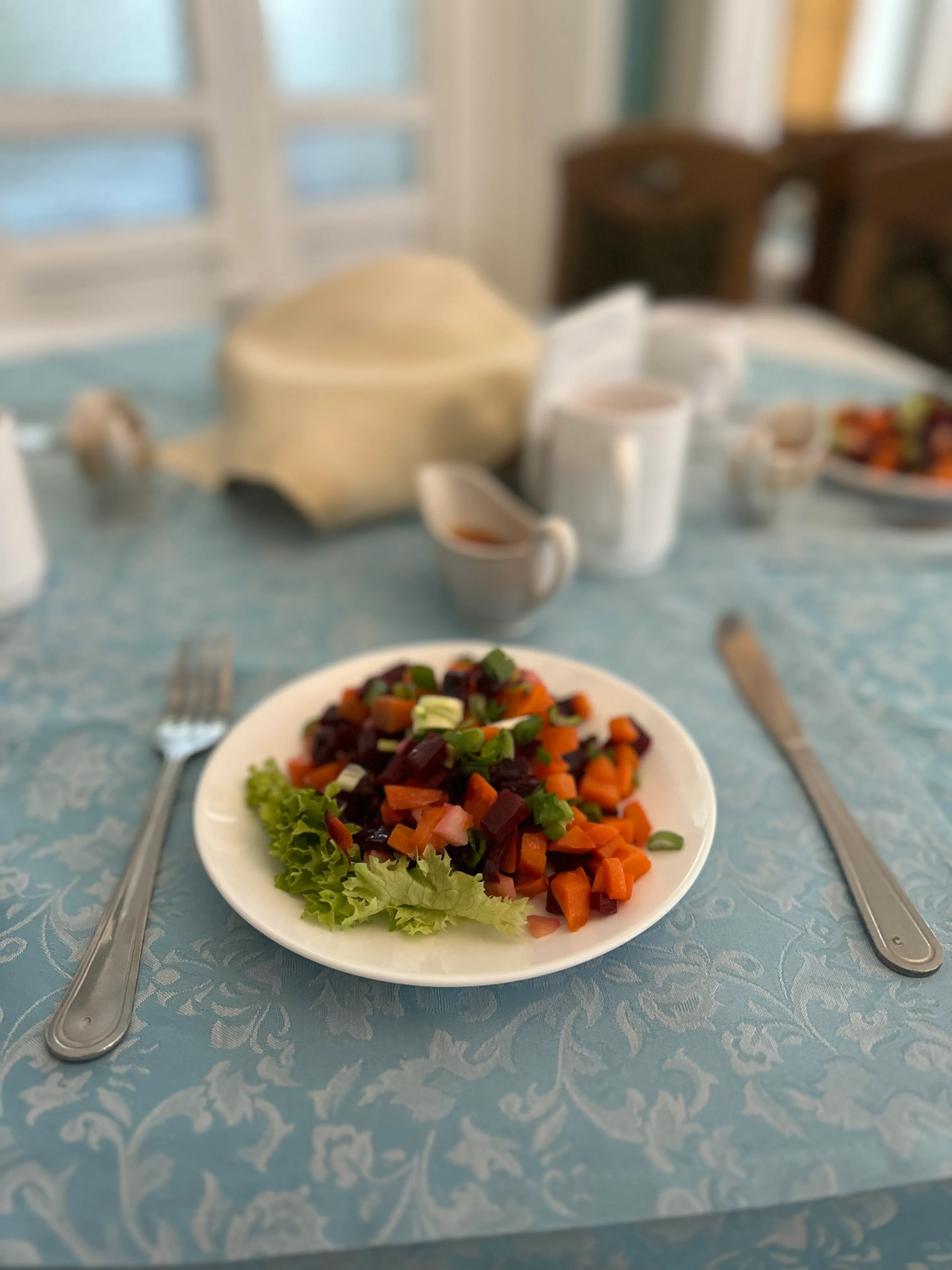
Let’s say it plainly: the idea behind the “broom” is correct. The body genuinely needs fibre. Dietary fibre is not digested, and that is precisely why it works: it adds bulk to the intestinal contents, stimulates peristalsis and feeds the beneficial microflora. Someone who adds vegetables, fruit and whole grains to their diet is doing a sensible, useful thing for their gut.
The problem is not the fibre. The problem is that the “broom”, used as a cleansing method, works blind:
- The state of the gallbladder is unknown. Without an ultrasound there is no way to know whether it contains stones. Actively stimulating digestion on top of stones a person does not know about is an unjustified risk.
- Contraindications are unknown. Digestive diseases in a flare-up, and other conditions in which coarse fibre or intestinal stimulation is undesirable, only show up in an examination.
- The “broom” misses the main point. It works only inside the intestinal lumen — it does not touch the stagnant bile, the liver, or the mucus and faecal stones that have accumulated over years.
So a person taking the “gut broom” is not doing something foolish — they are doing a sensible thing, just without a map. Fibre belongs in the daily diet. Cleansing is a medical programme that begins with an examination and runs under a doctor’s supervision.
How the Intestine Is Cleansed on the Course at the RUTA Center
At RUTA, colon cleansing is not a standalone service but the first link of a five-day inpatient programme with two stages: stage I — the liver, gallbladder, intestine and kidneys; stage II — the lymph, blood and blood vessels. The method is scientifically grounded and patented; more about its background is on the method page.
Before the course begins, every guest undergoes an examination: an ultrasound, an ECG, general and biochemical blood tests, and a urine test. It is on these results that the doctor decides whether the course can go ahead.
A whole system works on the intestine during the course — not a single remedy:
- enema procedures — 2–4 daily, based on medicinal herbs and seaweed; their purpose is to free the intestine of faecal masses as fully as possible and to prepare the biliary system for its natural cleansing;
- magnesium sulphate, whose intake opens the cleansing;
- herbal teas with laxative, cleansing, choleretic and anti-inflammatory effects;
- protein-free and salt-free diet therapy, which unburdens the liver and enhances diuresis — we described how it works in the article on diet therapy during the course;
- plenty of still water throughout the day;
- apple juice, which helps the intrahepatic bile ducts to open.
The programme culminates in the biliary tubage — an oil-and-acid enterosorption. As a result, thick stagnant bile is released, and the intestine is freed of faecal stones and mucus.
Both stages take place in an inpatient setting under round-the-clock medical supervision. The five-day routine is described on the course page.
What the Programme Gives
According to the center’s description, after the course activity and working capacity increase, mood, attention, memory and overall wellbeing improve, weight normalizes, and chronic conditions stay free of flare-ups for a long time. People who look after their health repeat such courses once every 10–12–16 months, depending on their individual condition and lifestyle.
Why the Intestine Is Not Cleansed Separately from the Liver
A fair question: if it is the gut that bothers me, can I take “just the enemas” without the rest of the programme? No — and this is a matter of principle for the center.
The intestine is the exit route. If bile secretion is stimulated while the intestine has not been emptied, the stagnant bile simply has nowhere to go. And the other way round: cleansing only the intestine while leaving the bile stasis untouched means removing a consequence without addressing the cause. That is why the programme is a whole — each element prepares the next, and individual procedures are not offered outside the course.
Fibre Every Day: Support Between Courses
A cleansing course once every 10–12–16 months does not cancel the gut’s daily work — and this is where fibre returns to its rightful role. Not as a “broom” procedure, but as the basis of the diet:
- vegetables and fruit with every meal;
- whole grains instead of refined ones;
- enough water through the day — fibre does not work without it;
- movement: peristalsis likes walking far more than an armchair;
- regular meals without long hungry gaps.
This is not a cleansing recipe — it is ordinary digestive hygiene. If you have a chronic digestive condition, discuss the amount and form of fibre in your diet with your doctor.
Contraindications: Who the Cleansing Is Not For
The course does not suit everyone, and it is more honest to say so directly.
Absolute contraindications:
- acute surgical and infectious diseases;
- progressive oncological diseases;
- chronic diseases with a high degree of activity and in the stage of decompensation.
Relative contraindications are strictly individual. The center’s doctors determine them for each specific case of a severe, long-standing illness. We covered this topic in detail in a separate article on detox contraindications.
The conclusion is simple: the question “may I cleanse my intestine?” is answered by a doctor after an examination — not by an article, a forum or a supplement leaflet.
How to Join the Course
The RUTA center operates at the Koncha-Zaspa sanatorium in Kyiv. Colon cleansing is part of the five-day course, together with accommodation, meals, the examination and all procedures — current prices are on the prices page.
Leave a request on the contacts page: a manager will answer the organizational questions, while indications and contraindications will be determined by a doctor after the examination.
Get rid of the excess — systematically, not blindly.
This article is for informational purposes only and does not replace a consultation with a doctor. Colon cleansing has contraindications; the decision to take the course is made by a doctor after an examination.
This article is for information only and does not replace a consultation with a doctor.