The liver is the body’s main filter: it neutralizes toxins, manages fat and cholesterol metabolism, and produces bile — the fluid without which normal digestion is impossible. When bile stagnates, more than digestion suffers: fatigue creeps in, heaviness appears under the right ribs, skin problems flare up.
No wonder searches like “liver cleanse”, “liver flush at home” and “body detox” are so popular. But there is a world of difference between a properly supervised medical procedure and a risky experiment based on internet recipes. Let’s look at how tubage actually works, who it can help — and who must never attempt it.
What Is Tubage and How Does a Liver Cleanse Work
Tubage is the stimulation of bile flow: it helps the gallbladder and hepatic ducts contract and push thick, stagnant bile out into the intestine, from where it leaves the body naturally.
At the RUTA center, tubage is performed as oil-and-acid enterosorption — the final step of a multi-day preparation:
- the cleansing begins with a dose of magnesium sulfate;
- continues with medicinal herbal infusions;
- is reinforced with apple juice, which allows the intrahepatic bile ducts to open;
- and finishes, once the digestive tract is cleared, with olive oil and freshly squeezed lemon juice — strong irritants and stimulants of the biliary tract.
As a result, the hepatic ducts and the walls of the gallbladder contract, and the liver is cleansed through the already opened ducts — the bile is renewed. Thick, stagnant bile comes out together with bilirubin and cholesterol concrements of various sizes and colors, while the intestine is freed of fecal stones and mucus.
Why Bile Stagnation Is Bad for Your Health
Bile is not just a “digestive juice”. It breaks down fats, helps absorb fat-soluble vitamins, and carries metabolic waste out of the body. When its outflow is disturbed, bile thickens and pools in the ducts and the gallbladder — over time, ideal conditions for concrements to form.
Intestinal mucus deserves a separate mention. Mucus is the body’s protective reaction to the excessive accumulation or retention of metabolic end products and toxins in the intestine. On the one hand, it absorbs heavy metal salts and radionuclides; on the other, it interferes with the normal absorption of trace elements and vitamins and their participation in metabolic and redox processes.
That is why at RUTA the cleansing of the biliary system always goes hand in hand with preparing and clearing the intestine first — otherwise the stagnant bile simply has nowhere to go.
What a Supervised Liver Cleanse Looks Like: 5 Days, 2 Stages
The RUTA program is a five-day inpatient course based at the Koncha-Zaspa sanatorium in Kyiv. The method is scientifically substantiated and patented; its author is Professor S. M. Husina, Doctor of Medical Sciences. You can read more on the method page.
The course consists of two stages:
- Stage I — liver, gallbladder, intestines and kidneys: normalizing metabolic processes in the most burdened organs and systems;
- Stage II — lymph, blood and blood vessels: the cleansing of the digestive tract, liver and urinary system is completed, fat and cholesterol metabolism is normalized, vessel walls continue to clear of atherosclerotic deposits, the immune system is stimulated, and the kidneys are cleansed to the fullest.
The Examination Before You Start
Before the course, every guest undergoes an examination: ultrasound, ECG, a general and biochemical blood test, and a urine test. This is not a formality — it is what allows the doctors to decide whether the procedure can be performed at all, and in what mode.
What the Program Includes
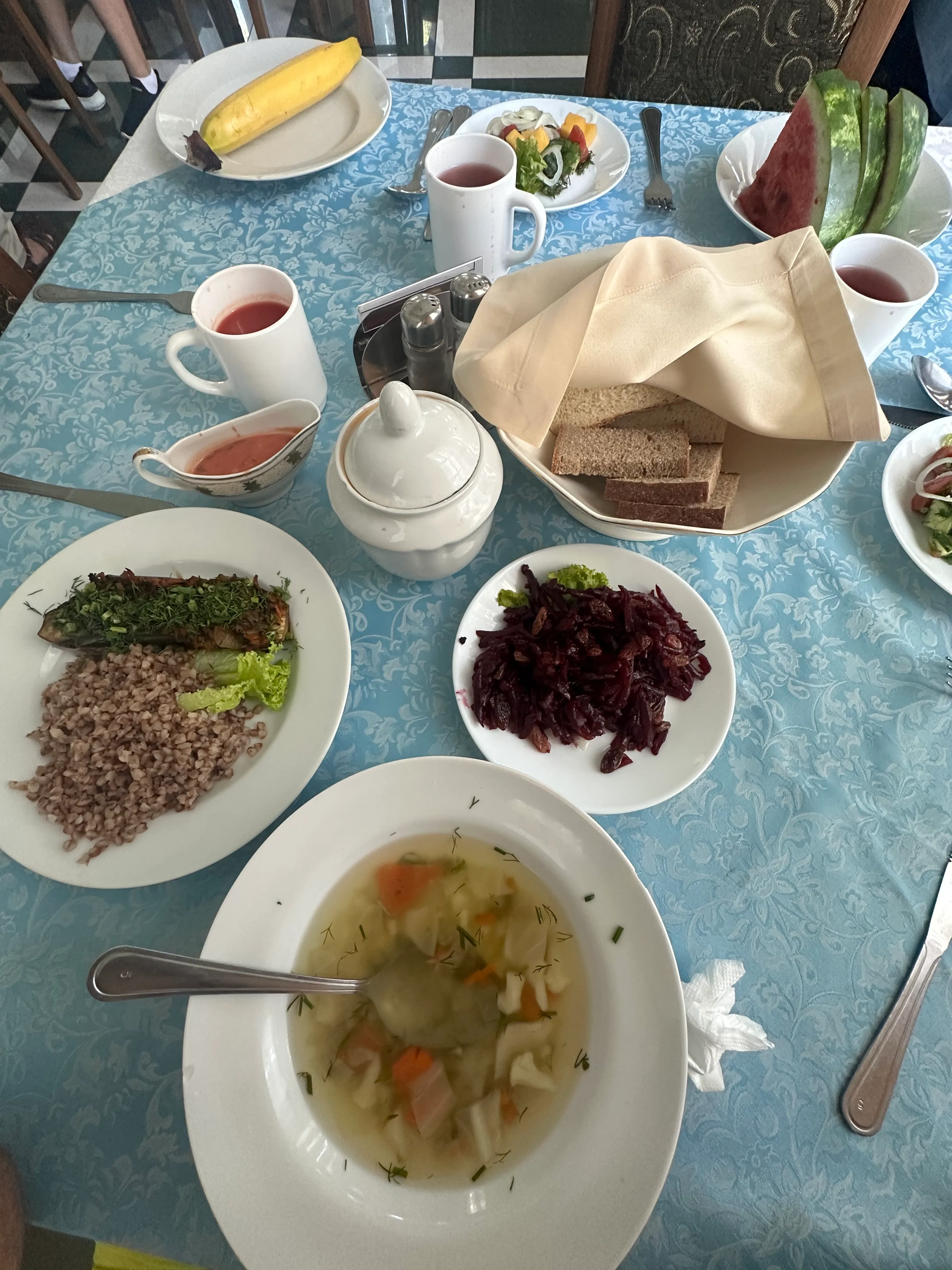
- Protein-free and salt-free dietary therapy — it unburdens the liver, activates its excretory and detoxification functions, and enhances diuresis;
- low-mineralization mineral water (2 g/l of salts) — Berezivska water has the optimal characteristics;
- herbal teas with anti-inflammatory, choleretic, diuretic and cleansing effects;
- 2–4 daily enema procedures based on medicinal herbs and seaweed — to free the intestine as fully as possible and prepare the biliary system;
- therapeutic back massage, swimming pool, quantum therapy, therapeutic exercise and water treatments.
The full daily schedule is described on the course page.
Who a Liver Cleanse Is For: Indications
The course is indicated first of all for:
- biliary tract pathology, including gallstone disease, especially in its early stages;
- liver pathology: fatty degeneration of various origins, drug-induced and alcohol-related liver damage;
- dysbacteriosis, especially after long courses of antibiotic therapy;
- alimentary-constitutional obesity, stages I–IV;
- skin diseases: neurodermatitis, eczema, diathesis;
- astheno-vegetative syndrome after acute respiratory illnesses;
- chronic fatigue syndrome, depression, hypochondriacal syndrome;
- sexual dysfunction following courses of antibacterial therapy;
- couples planning the birth of a healthy child.
And one more group — practically healthy people who understand a simple truth: preventing a disease is easier than treating it later. The method is designed above all for the prevention of most existing diseases — viral damage, immunodeficiency, atherosclerosis, allergies, and metabolic disorders of every kind.
Who Must Not Do It: Contraindications
This is the most important section of all. Tubage and liver cleansing are not for everyone.
Absolute contraindications:
- acute surgical and infectious diseases;
- progressive cancer;
- chronic diseases with a high degree of activity and in the stage of decompensation.
Relative contraindications are strictly individual. The center’s doctors determine them for each specific case of a severe, long-standing illness. This is exactly why the course never starts without an examination and a doctor’s assessment.
Why a DIY Liver Flush at Home Is a Bad Idea
The honest answer: a do-it-yourself “liver flush” from internet recipes is a dangerous gamble. Here is why.
- You do not know the state of your bile ducts and gallbladder. Without an ultrasound it is impossible to rule out stones — and stimulating bile flow with olive oil and lemon juice while stones are present is a recipe for serious complications.
- Home recipes skip the essential part — the multi-day preparation: the diet, the herbs, the apple juice that opens the intrahepatic ducts, the clearing of the intestine. Without it, stagnant bile has nowhere to go.
- No doctor is nearby. At RUTA, both stages take place under round-the-clock medical supervision, with physicians watching how your body responds and adjusting the procedures.
- A home “detox” ignores contraindications — both the absolute ones and the relative ones, which can only be determined individually.
The difference is not in the ingredients but in the system: examination beforehand, careful preparation, a controlled procedure, and medical oversight at every step. The center operates under a license of the Ministry of Health of Ukraine (series AB No. 567785, dated 11.11.2010).
What the Course Gives You and How Often to Repeat It
According to the center, after the course guests report higher energy and working capacity, better psychological resilience and mood, sharper attention, improved memory and overall well-being; weight normalizes, and chronic conditions stay in remission for a long time. The body’s resistance to infections and its endurance increase significantly.
People who take care of their health tend to repeat such cleansing courses once every 10–12–16 months, depending on their individual characteristics, lifestyle, eating habits and diet quality.
How to Book a Cleansing Course in Kyiv
The RUTA center operates at the Koncha-Zaspa sanatorium: 215 Stolychne Highway, Kyiv. The five-day course includes accommodation, meals, the medical examination and all procedures — see current prices on the pricing page.
Call us — we will answer your questions, discuss indications and help you choose the dates:
Get rid of the excess — under medical supervision, not by internet recipes.
This article is for informational purposes only and does not replace a consultation with a doctor. The decision to take the course is made after an examination and a specialist’s assessment.
This article is for information only and does not replace a consultation with a doctor.